SocArXiv wins Kohli Foundation for Sociology 2025 Infrastructure Prize


University of Maryland Libraries news release

May 7, 2025

The Kohli Foundation for Sociology has announced that SocArXiv is the winner of its 2025 Infrastructure Prize for Sociology. This honor especially recognizes the leadership of SocArXiv founder Professor Philip N. Cohen of the Department of Sociology.

SocArXiv (pronounced “sosh-archive”) is an innovative open archive of the social sciences, providing a free, nonprofit, open access platform for social scientists to upload working papers, preprints, and published papers, with the option to link research materials such as data and code.

SocArXiv now hosts 17,000 papers across all disciplines in social sciences, arts, humanities, education, and law, in many languages. It is institutionally housed by the UMD libraries and operates on the Open Science Platform of the Center for Open Science.

“With the support of the UMD Libraries, and our platform at the Center for Open Science, we do it all at no charge for authors or readers, on a surprisingly small annual budget and a dedicated team of volunteers working a couple of hours a week,” Cohen said.

“The UMD Libraries and SocArXiv are partners in supporting open and equitable access to research for the public good. We are proud to serve as SocArXiv’s institutional home and congratulate SocArXiv on this well-deserved recognition,” said Interim Dean of the University Libraries Daniel Mack.

This Kohli Infrastructure Prize honors scholars, projects, and organizations that have made exceptional contributions to the development of substantial infrastructures that advance sociological knowledge, and comes with an award of 10,000 euros, more than $11,000.

SocArXiv is one of the efforts in which Cohen is involved that focuses on reforming the system of scholarly communication. He often speaks on the topic of how scholars can productively engage with public audiences, to improve work and deepen its impact. He explores related topics in his new book, “Citizen Scholar: Public Engagement for Social Scientists” (Columbia University Press, 2025).

“SocArXiv has been a labor of love for me since 2016, helping thousands of researchers to get their work done, but the efforts of myself and our volunteers often go unnoticed. So it’s wonderful to have this recognition,” Cohen said. “SocArXiv is a nonprofit, academy-owned and directed, collaborative project of volunteers from sociology and other social sciences, and members of the library community. This recognition honors that collective effort to pave a new way forward in scholarly communication. There is a lot we can do ourselves—faster, better, and cheaper than we can under the big academic publishers—and we’re proving it every day.”

“These papers are often available before journal publication, allowing them to disseminate further, and faster,” Cohen said.

The platform’s many-hands-on-deck approach has facilitated knowledge sharing even during difficult times. For example, a draft paper on learning losses amid COVID-related school closures was uploaded to SocArXiv and downloaded tens of thousands of times, and was therefore serving as a resource and point of reference to countless scholars and researchers before it was ultimately published in PNAS. This kind of open exchange of information and ideas has helped researchers to be more nimble and more productive.

Looking ahead, Cohen said he and his collaborators are working to make the repository a place for hosting peer review projects as well, so that people who want to conduct peer review in a transparent setting—with evolving versions, reviews and replies—can integrate their work onto SocArXiv.

As collaboration and knowledge sharing are priorities of the College of Behavioral and Social Sciences, Dean Susan Rivera said this recognition of Cohen and the networks that SocArXiv has forged is especially meaningful.

“Our college community congratulates Professor Cohen and his collaborators. It is fitting that their impactful work promoting open science is being honored in this significant way,” Rivera said. “This important platform is a point of pride for BSOS.”

Cohen has been invited to represent SocArXiv at the foundation’s awards ceremony in November at the European University Institute in Fiesole, Florence, Italy. Cohen has also been invited to be a guest on a Kohli Foundation podcast.

“A key priority of SocArXiv is to open up social science, to reach more people more effectively, to improve research, and build the future of scholarly communication,” Cohen said. “We hope that the visibility this award brings will draw more scholars and users to the platform.”

Mexico City ivermectin updates

Imagen TV screenshot

We posted our decision to withdraw the paper, “Ivermectin and the odds of hospitalization due to COVID-19″, here. Since then there have been new developments. I will update this page if needed. -Philip Cohen

As of February 5.

Statements

  • The lead author on the paper, José Merino, tweeted a link to a letter to me over the names of six of the original seven authors. The letter called the decision to withdraw their paper “unethical, colonialist, and authoritarian,” and demanded my resignation. You can read the statement here.
  • The Secretaría de Salud de la Ciudad de México posted a statement (in Spanish; English translation here), arguing that the use of ivermectin to treat COVID-19 was “supported by the scientific evidence available worldwide in 2020,” before the availability of vaccines, due its documented effectiveness, low cost, and lack of harmful effects. Distributing the medicine was not an experiment, they wrote. In addition, about SocArXiv, they wrote: “This study was kept on the SocArxiv portal for almost a year, it always had code and data available for replication, and its conclusions are very similar to other works (Ascencio-Montiel et al. 2022).” (Note, that study, which used the same data from the Mexico City COVID-19 health kit distribution, acknowledged that the kids “included, besides an information brochure and a pulse oxymeter, medications such as azithromycin, ivermecin, acetaminophen and aspirin” — and the study made no claims about the effects of ivermectin itself, and the data doesn’t indicate who took which medicines.)

News

Opinion

Talk: How we know: COVID-19, preprints, and the information ecosystem

I recorded a 16-minute talk on the scientific process, science communication, and how preprints fit in to the information ecosystem around COVID-19.

It’s called, “How we knowCOVID-19, preprints, and the information ecosystem.” The video is on YouTube here, also embedded below, and the slides, with references, are up here.

Happy to have your feedback, in the comments or any other way.

SocArXiv media spotlight: Excess mortality in Puerto Rico

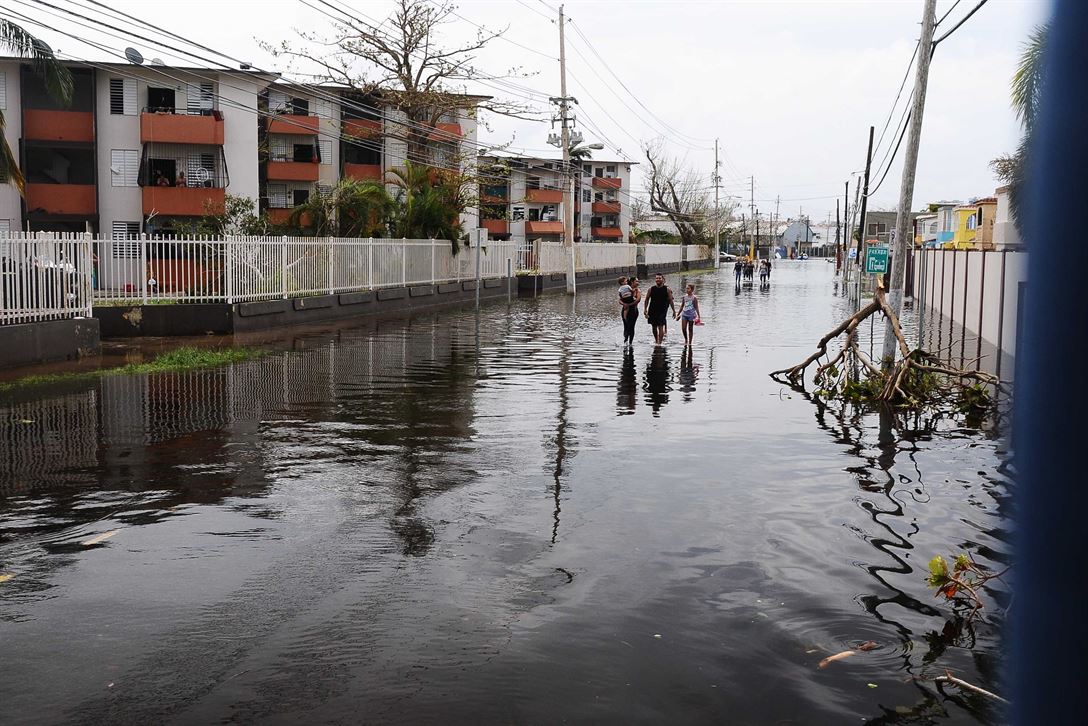
People walking in flood waters in Condado, San Juan, Puerto Rico, Sept. 22, 2017.
Condado, San Juan, Puerto Rico, Sept. 22, 2017. Puerto Rico National Guard photo by Jose Ahiram Diaz-Ramos.

A paper by Alexis Santos and Jeffrey T. Howard, posted on SocArXiv, has received wide media attention, highlighting some of the advantages of using SocArXiv. The paper, “Estimates of excess deaths in Puerto Rico following Hurricane Maria,” was posted as a preprint before peer review.

The abstract reports a “descriptive finding” on excess deaths following Hurricane María for September and October. Using historical data from the Puerto Rico Vital Statistics system, the authors estimated expected deaths for each month. Then, using statements from the Puerto Rico Department of Public Safety, they compared the number of deaths for September and October 2017 to those from previous years, taking variability into account. The difference between their estimates of actual deaths in 2017 and the high-end estimates for those months was 518 deaths for September and 567 deaths for October. They conclude that mortality on the island “may exceed the current official death toll by a factor of 10.”

The preprint has been cited and linked from articles in the New York Times, Vox, and Huffington Post, and other media sources. As of December 10 it has been downloaded from SocArXiv 1,333 times (and viewed in the browser window many more times than that).

Santos, who goes by @AppDemography on Twitter, is an active public scholar who previously posted a paper on SocArXiv about possible climate change effects on life expectancy in Europe.

This is a good best-practices story for several reasons.

  • There is an urgent need to understand the impact of the hurricane on Puerto Rico. The paper is not peer-reviewed, but it is ready to be distributed widely. The methods are clear and transparent. The media reporting now permits other scholars the opportunity to read and react to the paper publicly. It now appears the Santos and Howard estimates are in line with other calculations, and the paper contributes to an emerging consensus about the storm’s impact.
  • By posting the paper on SocArXiv and sharing it with the media from there, Santos was able to provide a persistent link to an open paper, time-stamped and linked with his profile page (which includes links to his ORCID ID, Google Scholar, and other accounts).
  • In addition to the persistent link on SocArXiv, the paper has a DOI associated with it. The Google Scholar link takes readers directly to the SocArXiv version, and is now recording citations to the paper. SocArXiv also preserves and makes availale the version record for the paper.
  • As a project on the Open Science Framework (which each SocArXiv paper automatically becomes), the paper may be easily associated with supporting documentation and research materials.
  • Finally, if the paper in some later version is published in a journal, the authors will have the opportunity of providing a forward-linking DOI on the SocArXiv page, so that readers will be directed to the journal site.

We’re delighted to see SocArXiv working as intended!